Monday, 12 February 2018

Real numbers

Real Numbers include:

 Whole Numbers (like 0, 1, 2, 3, 4, etc) Rational Numbers (like 3/4, 0.125, 0.333..., 1.1, etc ) Irrational Numbers (like π, √2, etc )

Real Numbers can also be positivenegative orzero.

So ... what is NOT a Real Number?

 Imaginary Numbers like √−1 (thesquare root of minus 1) 
are not Real Numbers 
 Infinity is not a Real Number

Mathematicians also play with some special numbers that that aren't Real Numbers.

The Real Number Line

The Real Number Line is like a geometric line.

A point is chosen on the line to be the "origin". Points to the right are positive, and points to the left are negative.

A distance is chosen to be "1", then whole numbers are marked off: {1,2,3,...}, and also in the negative direction: {...,−3,−2,−1}

Any point on the line is a Real Number:

The numbers could be whole (like 7)or rational (like 20/9)or irrational (like π)

But we won't find Infinity, or an Imaginary Number.

Why are they called "Real" Numbers?

Because they are not Imaginary Numbers.

The Real Numbers had no name before Imaginary Numbers were thought of. They got called "Real" because they were not Imaginary. That is the actual answer!

Real does not mean they are in the real world

They are not called "Real" because they show the value of something real.

In mathematics we like our numbers pure, when we write 0.5 we mean exactly half.

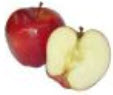
But in the real world half may not be exact (try cutting an apple exactly in half).


Trick based on Trigonometry table

How to Remember the Trigonometric Table

Did you ever have any trouble remembering the sine or tangent of an angle? This article explains how you can easily find the basic trigonometric numbers of the most common angles.

StepsEdit

1

Create a table. In the first row, write down the trigonometric ratios (sin, cos, tan, cot). In the first column, write down the angles (0°, 30°, 45°, 60°, 90°). Leave other entries blank.

2

Fill in the sine column. We will fill in the blank entries in the sin column using the expression √x/2. Once the sine column is filled, we'll be able to fill all other columns effortlessly!For the 1st entry in the sine column (that is, sin 0°), set x = 0 and plug it in the expression √x/2. Thus, sin 0° = √0/2 = 0/2 = 0

For the 2nd entry in the sine column (that is, sin 30°), set x = 1 and plug it in the expression √x/2. Thus, sin 30° = √1/2 = 1/2

For the 3rd entry in the sine column (that is, sin 45°), set x = 2 and plug it in the expression √x/2. Thus, sin 45° = √2/2 = 1/√2

For the 4th entry in the sine column (that is, sin 60°), set x = 3 and plug it in the expression √x/2. Thus, sin 60° = √3/2.

For the 5th entry in the sin column (that is, sin 90°), set x = 4 and plug it in the expression √x/2. Thus, sin 90° = √4/2 = 2/2 = 1.

3

Fill in the cosine column. Simply copy the entries in the sine column in reverse order into the cosine column. This is valid because sin x° = cos (90-x)° for any x.

4

Fill in the tangent column. We know that tan = sin / cos. So, for every angle take its sin value and divide it by the cos value to get the corresponding tan value. For example, tan 30° = sin 30° / cos 30° = (√1/2) / (√3/2) = 1/√3

5

Fill in the cotangent column.Simply copy the entries in tangent column in reverse order into the cot column. This is valid because tan x° = sin x° / cos x° = cos (90-x)° / sin (90-x)° = cot (90-x)° for any x.

Abacus

What is Abacus ?

Abacus is an instrument that was invented some 2500 years ago primarily in China, which later on spread through countries like Korea, Japan, Taiwan, Malaysia etc. It was used in the ancient times for calculating numbers through basic arithmetic system. It has now been proven as a complete brain development tool over last two decades.

Abacus became popular over the world after being transformed from a calculating instrument into a system having immense power to benefit children of small ages by expanding the brain usage, in addition to making maths learning easy and effective.

Getting Friendly with Abacus:

The image displayed is that of a structure of an abacus.

Functions of Abacus:

An abacus instrument allows performing basic operations like Addition, Subtraction, Multiplication and Division. It can also carry out operations such as counting up to decimal places, calculates sums having negative numbers etc.

Advantages of Abacus:

Dr. Toshio Hayashi, Director, Research Institute for Advanced Science and Technology (RIAST) is of the view that, starting abacus learning at a very young age, is useful in activating the brain of kids.

He also says, “We can activate the nerve cells by providing “stimuli” like moving fingers and talking aloud.”

When a child works on abacus it uses both its hand to move the beads. The finger movement of both hands activates the sensors of brain, the right hand coordinates with left brain and the left hand coordinates with right brain.

This facilitates the functioning of "The whole brain" and helps in added intellect, thereby creating 'child maths prodigy'.

 Visualization: Ms. Kimiko Kawano, Researcher, Nippon Medical School, Center for Informatics and Sciences, is of the opinion that abacus users simply visualize an image of abacus in their head. They do not replace the image into words. This difference can be seen clearly in the EEGs. 
What is important is that the ability to visualize can be put to use for other subjects… Concentration: Decker Avenue School, California conducted a research on the effects of abacus training on children in the classroom. The study indicated that increased concentration of the abacus students was one of the pre-dominating effects of the training program. Logical reasoning: Ms. Shizuko Amaiwa, Professor, Shinshu University, observed that advanced abacus learners were found to have received desirable effects in solving certain types of mathematical problems compared to non-abacus learners. In addition, a positive effect was seen, not only in mathematical problems with integers and decimals, but also in those with fractions, especially when higher level of logical thinking is required to solve them. Photographic memory: Ms. Shizuko Amaiwa is also of the opinion that the beneficial effect of abacus training is the improvement in memory... 
As a result, abacus learners were found to score higher than non-abacus learners… It can be speculated that the training to obtain the abacus image visually had the effect of making students sensitive towards spatial arrangement or enhanced photographic memory… Recall: Ms. Kimiko Kawano, Researcher, Nippon Medical School, Center for Informatics and Sciences, has stated that, “some abacus experts use their ability for memorizing whole page of textbook or years in history. The ability developed by abacas can be used effectively in different ways” such as the capability to recall.

Maths in medicine field

Medicine :

HourStartEnd12009/10 x 200 = 18021809/10 x 180 = 16231629/10 x 162 = 145.8...

The sequence of numbers shown above is geometric because there is a common ratio between terms, in this case 9/10. Doctors can use this idea to quickly decide how often a patient needs to take their prescribed medication.

Ratios and Proportions

Nurses also use ratios and proportions when administering medication.  Nurses need to know how much medicine a patient needs depending on their weight.   Nurses need to be able to understand the doctor’s orders.  Such an order may be given as: 25 mcg/kg/min.  If the patient weighs 52kg, how many milligrams should the patient receive in one hour?  In order to do this, nurses must convert micrograms (mcg) to milligrams (mg).  If 1mcg = 0.001mg, we can find the amount (in mg) of 25mcg by setting up a proportion.

By cross-multiplying and dividing, we see that 25mcg = 0.025mg.  If the patient weighs 52kg, then the patient receives 0.025(52) = 1.3mg per minute.  There are 60 minutes in an hour, so in one hour the patient should receive 1.3(60) = 78mg.  Nurses use ratios and proportions daily, as well as converting important units.  They have special “shortcuts” they use to do this math accurately and efficiently in a short amount of time.

Numbers give doctors much information about a patient’s condition.  White blood cell counts are generally given as a numerical value between 4 and 10.  However, a count of 7.2 actually means that there are 7200 white blood cells in each drop of blood (about a microlitre).  In much the same way, the measure of creatinine (a measure of kidney function) in a blood sample is given asmg per deciliter of blood.  Doctors need to know that a measure of 1.3 could mean some extent of kidney failure.  Numbers help doctors understand a patient’s condition.  They provide measurements of health, which can be warning signs of infection, illness, or disease.

Body Mass Index

In terms of medicine and health, a person’s Body Mass Index (BMI) is a useful measure.  Your BMI is equal to your weight in pounds, times 704.7, divided by the square of your height in inches.  This method is not always accurate for people with very high muscle mass because the weight of muscle is greater than the weight of fat.  In this case, the calculated BMI measurement may be misleading.  There are special machines that find a person’s BMI.  We can find the BMI of a 145-pound woman who is 5’6” tall as follows.

First, we need to convert the height measurement of 5’6” into inches, which is 66”.  Then, the woman’s BMI would be:

This is a normal Body Mass Index.  A normal BMI is less than 25.  A BMI between 25 and 29.9 is considered to be overweight and a BMI greater than 30 is considered to be obese.  BMI measurements give doctors information about a patient’s health.  Doctor’s can use this information to suggest health advice for patients. The image below is a BMI table that gives an approximation of health and unhealthy body mass indexes.

Image reproduced with permission of Health Canada


CAT Scans

One of the more advanced ways that medical professionals use mathematics is in the use of CAT scans.  A CAT scan is a special type of x-ray called a Computerized Axial Tomography Scan.  A regular x-ray can only provide a two-dimensional view of a particular part of the body.  Then, if a smaller bone is hidden between the x-ray machine and a larger bone, the smaller bone cannot be seen.  It is like a shadow.

Image reproduced with permission of NeuroCognition Laboratory

It is much more beneficial to see a three dimensional representation of the body’s organs, particularly the brain.  CAT scans allow doctors to see inside the brain, or another body organ, with a three dimensional image.  In a CAT scan, the x-ray machine moves around the body scanning the brain (or whichever body part is being scanned) from hundreds of different angles.  Then, a computer takes all the scans together and creates a three dimensional image.  Each time the x-ray machine makes a full revolution around the brain, the machine is producing an image of a thin slice of the brain, starting at the top of the head and moving down toward the neck.  The three-dimensional view created by the CAT scan provides much more information to doctors that a simple two-dimensional x-ray.

Mathematics plays a crucial role in medicine and because people’s lives are involved, it is very important for nurses and doctors to be very accurate in their mathematical calculations.  Numbers provide information for doctors, nurses, and even patients.  Numbers are a way of communicating information, which is very important in the medical field.

Another application of mathematics to medicine involves a lithotripter. This is a medical device that uses a property of an ellipse to treat gallstones and kidney stones. To learn more, visit the Lithotripsy page.

Ratio and propotion in daily life

RATIO AND PROPOTION

GROCERY SHOP:                        
 When going shopping, children often look at the prices of various groceries. A parent can easily explain ratios to her child using two different boxes of cereal. For example, if a 10-ounce box of cereal costs $3 and a 20-ounce box of cereal costs $5, the 20 ounce box is the better value because each ounce of cereal is cheaper. This relationship is produced by dividing the number of ounces of cereal by the price. For the smaller box of cereal, each ounce costs 30 cents; for the larger box of cereal, each ounce of cereal costs 25 cents.
Cooking:
Ratios of various ingredients in recipes are essential to cooking the most delicious meals. An example of this is Daisy Martinez's arroz con pollo recipe posted on the Food Network website. To create an achiote oil, Martinez suggests that 1 cup of olive oil to 2 tablespoons of achiote, or orange seeds, is required to achieve the best taste. This can be taught to children as a 1 cup to 2 tablespoons ratio.
Driving to Vacation:
Children love to ask "Are we there yet?" when parents take them on vacation. Ratios can be used to teach them how to answer that question for themselves. For example, while taking a road trip from New York City to Philadelphia, approximately 90 miles of driving is required. Assuming that the car is traveling at 60 miles per hour, convert the hour to 60 minutes. Then divide 90 miles by 60 minutes to demonstrate that the family will get to Philadelphia in one and a half hours.
Special Ratios:
Two special ratios consistently seen in real life are pi (3.14) and phi (1.618). Pi is the relationship between the circumference of a circle and its diameter. In the real world, pi can be used to calculate the circumference of a circular swimming pool, provided you know the diameter or radius. Phi, which is also called the golden ratio, was originally determined by Euclid to calculate line segments and relationships between shapes; it is often seen in biological relationships. For example, the length of a person's forearm divided by the length of the same person's hand results in a number close to 1.618, or phi.

Multiplication trick on vedic maths

1. Multiply a number by 9:

(I know you guys must be like Whhaaaaat!! isme kya yeh to hum bhi jante hai, but this is very quick when it comes to big numbers)

2. Multiply a number by 11:

Shift the number by one unit and add to same number.

For this method you should remember square of all numbers till 25.


Thursday, 8 February 2018

Application of Trigonometry

Real life applications of trigonometry

Trigonometry simply means calculations with triangles. It is a study of relationships in mathematics involving lengths, heights and angles of different triangles. The field emerged during the 3rd century BC, from applications of geometry to astronomical studies. Trigonometry spreads its applications into various fields such as architects, surveyors, astronauts, physicists, engineers and even crime scene investigators.
Now before going to the details of its applications, let’s answer a question have you ever wondered what field of science first used trigonometry?
The immediate answer expected would be mathematics but it doesn’t stop there even physics uses a lot of concepts of trigonometry. Another answer According to Morris Kline, in his book named- Mathematical Thought from Ancient to Modern Times, proclaimed that ‘trigonometry was first developed in connection with astronomy, with applications to navigation and construction of calendars. This was around 2000 years ago. Geometry is much older, and trigonometry is built upon geometry’. However, the origins of trigonometry can be traced to the civilizations of ancient Egypt, Mesopotamia and India more than 4000 years ago.
Starting from the basics,

Can trigonometry be used in everyday life?
Trigonometry may not have its direct applications in solving practical issues, but it is used in various things that we enjoy so much. For example music, as you know sound travels in waves and this pattern though not as regular as a sine or cosine function, is still useful in developing computer music. A computer cannot obviously listen to and comprehend music as we do, so computers represent it mathematically by its constituent sound waves. And this means sound engineers need to know at least the basics of trigonometry. And the good music that these sound engineers produce is used to calm us from our hectic, stress full life – All thanks to trigonometry.

Trigonometry can be used to measure the height of a building or mountains:
if you know the distance from where you observe the building and the angle of elevation you can easily find the height of the building. Similarly, if you have the value of one side and the angle of depression from the top of the building you can find and another side in the triangle, all you need to know is one side and angle of the triangle.

Trigonometry in video games:
Have you ever played the game, Mario? When you see him so smoothly glide over the road blocks. He doesn’t really jump straight along the Y axis, it is a slightly curved path or a parabolic path that he takes to tackle the obstacles on his way. Trigonometry helps Mario jump over these obstacles. As you know Gaming industry is all about IT and computers and hence Trigonometry is of equal importance for these engineers.

Trigonometry in construction:
In construction we need trigonometry to calculate the following:
Measuring fields, lots and areas;Making walls parallel and perpendicular;Installing ceramic tiles;Roof inclination;The height of the building, the width length etc. and the many other such things where it becomes necessary to use trigonometry.
Architects use trigonometry to calculate structural load, roof slopes, ground surfaces and many other aspects, including sun shading and light angles.

Trigonometry in flight engineering:
Flight engineers have to take in account their speed, distance, and direction along with the speed and direction of the wind. The wind plays an important role in how and when a plane will arrive where ever needed this is solved using vectors to create a triangle using trigonometry to solve. For example, if a plane is travelling at 234 mph, 45 degrees N of E, and there is a wind blowing due south at 20 mph. Trigonometry will help to solve for that third side of your triangle which will lead the plane in the right direction, the plane will actually travel with the force of wind added on to its course.

Trigonometry in physics:
In physics, trigonometry is used to find the components of vectors, model the mechanics of waves (both physical and electromagnetic) and oscillations, sum the strength of fields, and use dot and cross products. Even in projectile motion you have a lot of application of trigonometry.

Do archaeologists use trigonometry?
Trigonometry is used to divide up the excavation sites properly into equal areas of work. Archaeologists identify different tools used by the civilization, using trigonometry can help them in these excavate. They can also use it to measure the distance from underground water systems.

Trigonometry in criminology:
In criminology, trigonometry can help to calculate a projectile’s trajectory, to estimate what might have caused a collision in a car accident or how did an object fall down from somewhere, or in which angle was a bullet shot etc.

Trigonometry in marine biology;
Marine biologists often use trigonometry to establish measurements. For example, to find out how light levels at different depths affect the ability of algae to photosynthesize. Trigonometry is used in finding the distance between celestial bodies. Also, marine biologists utilize mathematical models to measure and understand sea animals and their behaviour. Marine biologists may use trigonometry to determine the size of wild animals from a distance.

Trigonometry in marine engineering:
In marine engineering trigonometry is used to build and navigate marine vessels. To be more specific trigonometry is used to design the Marine ramp, which is a sloping surface to connect lower and higher level areas, it can be a slope or even a staircase depending on its application.